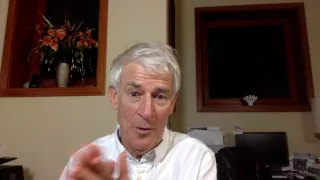
Learning Japanese: Steve and Deni’s Discussion in English, Russian and Japanese
June 1 2016

Learning Japanese: Steve and Deni’s Discussion in English, Russian and Japanese

Timelines: 2:19 Age is not an obstacle for language learning. 2:59 Time and motivation matter, talent doesn’t. 3:20 Japanese doesn’t seem so hard. 4:01 Deni’s language background. 5:36 4 genders in Chechen language. 8:00 Starting out with Japanese characters. 9:09 Looking words up in a dictionary. 10:30 Different language control centers in your brain. 11:13 Apart from characters Japanese is not a difficult language. 12:33 The biggest stumbling block in Japanese. 14:13 You have to accept a lot of fuzziness in language learning. 14:58 Как Дени стал учить японский? / How Deni went about learning Japanese. 16:23 Как Стивен учил японский. / How Steve went about learning Japanese. 16:49 Канджи, Кандзи или Хандзы? / What is the right term for characters? 19:59 Куда стоит поехать и что делать в Японии? / Places to visit and things to do in Japan. 21:41 Handy phrases for holding a conversation in Japanese. 25:37 Struggling with Japanese keyboard. 28:44 50% of Japanese words are of Chinese origin. 33:41 Steve: I’m always enthusiastic about interacting with different people. If you're new to Russian, you can find some good resources from this LingQ post: https://www.lingq.com/blog/2018/12/14/russian-short-stories/ Visit https://www.LingQ.com My Blog: http://blog.thelinguist.com/ My Facebook Page: https://www.facebook.com/lingosteve My Twitter: https://twitter.com/lingosteve
Watch Video
Useful Language Learning Techniques - Conversation Exchange
June 1 2016

Useful Language Learning Techniques - Conversation Exchange

Visit https://www.LingQ.com My Blog: http://blog.thelinguist.com/ My Facebook Page: https://www.facebook.com/lingosteve My Twitter: https://twitter.com/lingosteve Follow the new LingQ channel: https://goo.gl/WVnzRS Follow "Steve's Cafe" Channel: http://www.youtube.com/c/SteveKaufmann Transcript: Hi there, Steve Kaufmann. Today I want to talk about conversation exchanges and language exchanges via the internet. It’s something available to us today that wasn’t available when I started learning languages. It’s amazing. By the way, do you like my Japanese T-shirt? We had a team of Old Timer Hockey players from Japan visit with us and we all got a nice T-shirt. When I think back 50 years ago when I was studying Chinese the idea that I could just get online and talk to someone through some magic computer, I mean can you imagine? Fifty years ago it was just inconceivable that you could do this and nowadays there are a number of sites which offer the opportunity to connect with teachers. Some are free; in other words, just a pure language exchange or conversation exchange. Some of them you hire a teacher or someone to speak to. I can only talk about my experience which is limited to italki, which I have found to be very good. We have a similar function at LingQ, but we don’t have as many tutors as italki. In many ways, I don’t think we do it as well. Some parts of it I think we do better, but when I can find a tutor at LingQ I use a tutor at LingQ otherwise I’ll go to italki. The idea that you can connect with people anywhere in the world who speak the language that you’re speaking, wow! Some words of caution. Personally, and I’ve said this before, until I have a certain level in the language I don’t enjoy the language exchange or conversation exchange because I want to make sure what the person is saying. That’s absolutely number one. Even if I can’t express myself well, I want to understand what the other person is saying and (B) I want to be able to say something in the language because it actually is quite stressful. Even when we’re speaking well, it’s a more stressful way to communicate with someone than sitting with them across a table. It is more stressful. I find that it’s a little bit more exhausting. I should say I have been speaking now. I’ve started speaking with a Ukrainian tutor twice a week and I still have my Russian tutor that I speak to and at the end of an hour I’m kind of exhausted. Now, in order to speak for an hour you have to be at a certain level. Very often, I’ll start at 15 minutes or half an hour and then as I progress I’ll get up to an hour. As I say, it is a little bit stressful, but it’s certainly something to do. Even though I’m a proponent of input-based learning and I’ve spent most of my time and I still do. For example, with my Ukrainian I speak two hours a week, but I’m constantly reading. I’m reading now on Ukrainian history, listening to Ukrainian history, listening to Hora Más Que radio. So input is king, but the output is necessary and these conversation exchange and language exchange sites like italki and what we have at LingQ are a very good way of getting that output experience. As an example of how that works, I’m going to follow this up with a video where I spoke to someone from Russia who commented on one of my YouTube videos that he’s learning Japanese and could we talk a bit about learning Japanese. So what follows here is a separate video. It’s quite long because it’s very difficult to keep these things short, but we speak in three languages, English, Russian and Japanese and we talk, mostly, about learning Japanese. The first 12-13 minutes are in English, then another seven-eight or however many minutes in Russian and we end up in Japanese. What is very interesting in this video, if you have the patience to follow it, is I’ve been speaking Ukrainian and mostly listening to Ukrainian, then I had an hour of Russian with my Russian tutor, this then was followed by speaking to this Denny in Moscow and even though my Japanese is stronger than my Russian I couldn’t get my brain out of Russian. I really struggled to switch over to Japanese and it’s the first time I’ve had that difficulty. Normally, I can move quite easily. Maybe it’s because I’d just had that hour of Russian beforehand and because I find the language exchange via Skype on the computer is a little more stressful than just a casual conversation. I will be interested in hearing from you, bye for now.
Watch Video
The New World of Language Learning
May 18 2016

The New World of Language Learning

Visit https://www.LingQ.com My Blog: http://blog.thelinguist.com/ My Facebook Page: https://www.facebook.com/lingosteve My Twitter: https://twitter.com/lingosteve Follow the new LingQ channel: https://goo.gl/WVnzRS Follow "Steve's Cafe" Channel: http://www.youtube.com/c/SteveKaufmann Transcript: Yes, I’m very excited that we’ve started our LingQ Academy Live. Our three members, Hanna, Emily and Thomas, are here. I had a short meeting with them and I explained my vision that, basically, we’re in a new world of language learning where learners are teachers, teachers are learners and we learn from the world around us. That’s essentially what we’re going to be doing over the next three months, so you might find our little discussion interesting. There will be more videos along these lines over the next three months, so stay tuned. I can remember when I was roughly your age, I can actually remember. At that time, I spoke two languages. Essentially, I spoke English and French and I was just starting to get involved in Chinese. For me, first of all, everything surrounding French and French culture was a great discovery. The more I got involved and got interested in things French, French movies, French history, whatever, the better my French became obviously. The same was true with Chinese, where I discovered this whole new world of Chinese. Since that time, of course, I’ve learned many other languages, so you have the opportunity to eventually speak many languages. I know you’re interested not only in English, but in other languages. Before I get into the details of how we’re going to approach our English program, stop me if there’s anything you don’t understand, I think what’s happening in the world of education is that if I think back to when I studied languages you learned at school. School was the source. There is school. Teacher-school, that’s where you learned, that was the only place to learn. In fact, in my case even then wasn’t really the case because as long as I relied on school, for example for French, I couldn’t speak French, but when I got interested in French movies… Of course I lived in Montreal, so even though there were a million Anglophones in Montreal if I wanted to access the French culture there I could. So to the extent that I got away from the classroom, I learned more. The amount of language learning opportunity that we have today is so much bigger than was the case 50 years ago. There’s no comparison. When I think of how I use the internet, my iPad and different technology, including LingQ of course, audio books, eBooks, there is so much more stuff, conversations via the internet. There are so many more reasons why today education is not the best school. Education is the world, accessible through all the modern things of communication, mp3 files, YouTube, you name it. I think that’s what we’re going to experience here is that, in a way, the role of the teacher and the learner changes a bit. Learners become teachers, teachers become learners and learners learn from each other, it’s that kind of an environment. So what we’re going to do in the next three months is work with you on English, specifically, and Annie is going to film this so that other people will be following what we’re doing. It’s all part of this idea that people are helping each other, sharing with each other, learning from each other. In the initial period, I’m going to talk about my experience, my experience of learning languages and what I think works, but after a month or so I want to hear about your ideas of what you think works. So we’ll be talking about these things and other people who are following it will also hopefully be stimulated by this and they might come forward with their ideas. We sometimes call it our LingQ Academy Live Reality Show, but it’s a reality show with a message. It’s not just about who gets kicked off the island; it’s actually about something that I think can be helpful and beneficial to you. Now, with regard to our goal, in terms of my working with you I have three goals that I want to teach. 1. I think you are already very much independent learners. Otherwise, you wouldn’t have come here. Otherwise, you’d simply go to the local school. So you are independent, but I’m hoping that we can make you even more effective independent learners. In other words, people who go and find content of interest, who know what they want to learn. If they don’t understand something having to do with grammar, they know where to find it on the internet. They’re finding their own material, finding things of interest to them and through pursuing these things therefore they’re learning. So we’re going to talk about ways to become even better independent learners, that’s one thing. 2. The second thing is we’re going to talk about how to improve our English.
Watch Video
Language Exercises: It's All About the Gains
May 11 2016

Language Exercises: It's All About the Gains

Visit https://www.LingQ.com My Blog: http://blog.thelinguist.com/ My Facebook Page: https://www.facebook.com/lingosteve My Twitter: https://twitter.com/lingosteve Follow "Steve's Cafe" Channel: http://www.youtube.com/c/SteveKaufmann Transcript: Hi there, Steve Kaufmann here, today I’m going to again talk about language learning. If you like talking about language learning, please subscribe to my channel. Today I want to talk about fitness and language learning and, particularly, CrossFit and language learning. Now, we need to be fit in order to engage in physical activity. The more fit we are, normally, the better we do in sports, for example, in skiing or tennis, whatever it might be. I think the same is true in language learning. We need to make ourselves develop our stamina and our physical ability to learn languages. This is something I talked about in my Japanese video and will be getting back to in that Japanese video. In particular, I want to talk about CrossFit because I’ve started doing CrossFit here in Vancouver a couple of weeks ago. CrossFit focuses on a limited number of exercises. They work the legs, the core and the shoulders, but always sort of in a freestanding situation. You’re doing squats. You’re doing jerks or snatches. While it’s controversial, their view is that this is very good because you’re not just focusing on one muscle, whereas if you’re sitting at a machine in a gym you might just be working on your biceps or something. I have found it excellent. I find that it has improved my posture, I feel very good, so the question is are there a limited number of exercises we can do in language learning and that by focusing on these we increase our fitness, fitness for language learning. Remember, whatever this sort of concentrated exercise might be we still have to do a number of other things; however, if we can increase our alertness, our ability to notice. I think the ability to notice is like fitness in sports. The more things you notice, the better you’re going to learn the language. So what I’ve been doing in the last week or so is that I will read my text in Polish, I’ll focus on underlining and highlighting more phrases and then I can hear the text to speech of those phrases, so I kind of hear them sounding in my mind. Often, these are phrases with verbs in them; I think those are the most important kinds of phrases. Then, I go to the dictation section at LingQ and I hear the text to speech and then I have to type in what I heard in the dictation. So I’m listening to two, three, four, five words of Polish and I have to write in what I heard. Wow, it’s amazing how I mishear. You assume you’re hearing something when, in fact, what the person said was quite different. So training myself to hear better what is said and to write correctly is not only enabling me to remember these phrases, but is also increasing my alertness, my ability to notice and, therefore, my fitness. So I think this principle of CrossFit, a limited number of exercises that are very good for you. It’s not the only thing you do, but they really improve your general fitness. I think the same might be true of this emphasis on phrases and then doing dictation. I’ll continue doing this and I’ll report back to you. I look forward to hearing your comments. Thank you for listening, bye for now.
Watch Video

Are you ready for language learning success?

Discover how Steve learns on LingQ

Learn like Steve